For those who have been following news of late, you have probably seen the row between Nigeria and South Africa after some 150 Nigerians were deported from South Africa for allegedly carrying fake yellow fever certificates, an action that prompted retaliatory deportations of South Africans from Nigeria's Murtala Muhammad International Airport.
Many countries still require travelers moving into their countries from countries with risks of transmission to carry yellow fever certificates.
The countries in Africa considered to be high risk due to high incidences of yellow fever infections include Tanzania, Somalia and Sao Tome and Principe. If you have stayed overnight or longer in these countries, then a yellow fever vaccination will be mandatory as you travel to other countries.
Vaccination certificates requirements of countries are published by the World Health Organization and it's important for all travellers to carefully review these requirements and get the necessary vaccinations to avoid getting stuck at the airport. It's also important for travellers to get vaccinated at any of the WHO designated yellow fever vaccinating centres to avoid running into problems over "fake" yellow fever certificates. Sometimes, a naive traveller might decide to take a vaccine at their local hospital, while the vaccine might be valid, the centre and certificate are probably not recognized and designated by WHO and some immigration officials will not recognize such yellow fever certificates and many of them will not bear a stamp in such cases. Always ensure your yellow fever certificate is STAMPED by the authority administering the vaccination. A yellow fever certificate without a stamp will not be considered valid by many authorities and often results in deportations.
Once administered, a yellow fever vaccine is valid or 10 years! It will be a decade before you are required to take another vaccine so this is not really an inconvenience for travellers frequently hoping from one country to another. Th ey ellow fever jab is however not recommended for those over the age of 65. So please take your yellow fever vaccines properly and avoid putting your governments at loggerheads :)
Some of the African countries where yellow fever certificates are required include:
Email Us at FlightAfricablog@gmail.com
 |
| Yellow fever endemic areas in Africa: If you come from Africa's yellow fever belt, you will always need a yellow fever certificate to travel to almost every African country. Please review the list below for the various requirements on yellow fever vaccinations. |
The countries in Africa considered to be high risk due to high incidences of yellow fever infections include Tanzania, Somalia and Sao Tome and Principe. If you have stayed overnight or longer in these countries, then a yellow fever vaccination will be mandatory as you travel to other countries.
Vaccination certificates requirements of countries are published by the World Health Organization and it's important for all travellers to carefully review these requirements and get the necessary vaccinations to avoid getting stuck at the airport. It's also important for travellers to get vaccinated at any of the WHO designated yellow fever vaccinating centres to avoid running into problems over "fake" yellow fever certificates. Sometimes, a naive traveller might decide to take a vaccine at their local hospital, while the vaccine might be valid, the centre and certificate are probably not recognized and designated by WHO and some immigration officials will not recognize such yellow fever certificates and many of them will not bear a stamp in such cases. Always ensure your yellow fever certificate is STAMPED by the authority administering the vaccination. A yellow fever certificate without a stamp will not be considered valid by many authorities and often results in deportations.
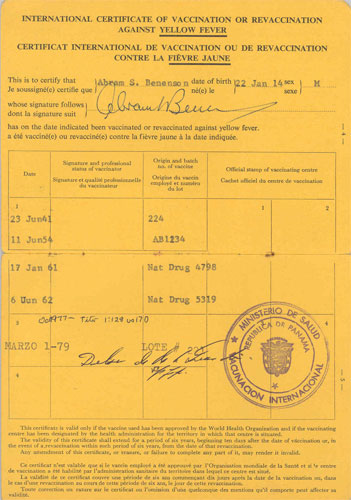 |
| A stamped Yellow Fever Certificate |
Some of the African countries where yellow fever certificates are required include:
- Angola: Yellow Fever Vaccination Certificate Required for ALL travelers over 1 year old. It's also recommended for your own safety to take a Yellow Fever vaccine when visiting Angola as the country is still considered a yellow fever risk due to incidences of the disease in recent years.
- Algeria: Yellow Fever Vaccination required for all travelers over 1 year old arriving from countries with yellow fever infection. Algeria has no yellow fever risks and yellow fever vaccinations not recommended if you are coming from a country that's yellow fever free.
- Benin: A yellow fever certificate is required for ALL travelers over 1 year old. It's also highly recommended for travellers coming from the yellow fever free countries to take the vaccine due to risk of infection.
- Botswana: A yellow fever vaccination is required for travelers over 1 year of age arriving from or having passed from countries with risk of yellow fever transmission. Travelers from countries that are yellow fever are free do not have to worry as there is no risk for yellow fever transmission in Botswana.
- Burkina Faso: A yellow fever vaccination is required from ALL travelers over 1 year of age. There is also risk of yellow fever transmission in Burkina Faso so it's in the travelers' best interest to ensure they get a yellow a fever vaccine before traveling to Burkina Faso.
- Burundi: A Yellow fever vaccination is required for all travellers over 1 year of age. It's also highly recommended fr travellers to take an initiative to get the vaccine since Burundi is considered by the WHO as having a risk of yellow fever transmission.
- Cameroon: Yellow fever vaccinations required for all travellers over 1 year of age. It's also highly recommended for travellers entering Cameroon to get a yellow fever vaccination due to risk of transmission.
- Central African Republic: Yellow vaccination required for all travellers over 1 year of age. Highly recommended for travellers to ensure they take yellow fever vaccine due to risk of transmission in the country.
- Chad: A yellow fever vaccination is required from travellers arriving from countries with risk of yellow fever transmission. Highly recommended for travellers to get the vaccine due to risk of transmission in Chad.
- Cape Verde: A Yellow fever vaccination certificate is required from travellers arriving from countries with risk of yellow fever transmission. Travellers from countries with no risk of yellow fever transmission do not need yellow fever certificates.
- Comoros: No yellow fever vaccination requirements.
- Congo: Yellow fever vaccination certificate is required from all travellers. Highly recommended for travellers to ensure they take yellow fever vaccine due to risk of transmission in the country.
- Cote d'Ivoire: Yellow fever vaccination certificates required from all travellers over 1 year of age. Highly recommended for travellers to ensure they take yellow fever vaccine due to risk of transmission in the country.
- Yellow vaccine required from all travellers over 1 year of age. Yellow vaccine highly recommended for travellers over 9months old except under the following conditions: Generally, a yellow fever vaccine is not recommended for a traveller whose itinerary is limited the DR Congo's Katanga Province.
- Djibouti: A yellow fever vaccine is required from all travellers arriving from countries with risk of yellow fever transmission.
- Egypt: A Yellow fever vaccination is required from travellers arriving from countries with high risk of yellow fever transmission. All arrivals from Sudan are required to possess either a vaccination certificate or a location certificate issued by a Sudanese official centre stating that they have not been in Sudan south of 15°N within the previous 6 days. Travellers from countries with no yellow fever risk do not have to worry about yellow fever vaccinations.
- Equitorial Guinea: A yellow fever vaccination certificate is required from travellers arriving from countries wit risk of yellow fever transmission. Highly recommended for travellers to ensure they take yellow fever vaccine due to risk of transmission in the country.
- Eritrea: Country requirement: a yellow fever vaccination certificate is required from travellers arriving from countries with risk of yellow fever transmission. Generally not recommended1 for travellers going to the following states: Anseba, Debub, Gash Barka, Mae Kel and Semenawi Keih Bahri.
Not recommended for all other areas not listed above, including the islands of the Dahlak Archipelagos (Map). - Ethiopia: A yellow fever vaccination certificate is required from travellers over 1 year of age arriving from countries with risk of yellow fever transmission. Highly recommended for travellers aged 9 months and over to ensure they take yellow fever vaccine due to risk of transmission in some areas of the country. Generally not recommended1 for travellers whose itineraries are limited to the Afar and Somali provinces (Map).
- Gabon: A yellow fever vaccination certificate is required for all travellers over 1 year of age. Highly recommended for travellers aged 9 months and over to ensure they take yellow fever vaccine due to risk of transmission in the country.
- Gambia: A yellow fever vaccination certificate is required from all passengers arriving from countries wit risk of yellow fever transmission. Highly recommended for travellers to ensure they take yellow fever vaccine due to risk of transmission in some areas of the country.
- Ghana: A yellow fever vaccination is required from all travellers over 9 months of age. Highly recommended for travellers to ensure they take yellow fever vaccine due to risk of transmission in the country.
- Guinea: A yellow fever vaccination is required from all travellers over 1 year arriving from countries with risk of yellow fever transmission. Highly recommended for travellers to ensure they take yellow fever vaccine due to risk of transmission in the country.
- Guinea Bissau: A yellow fever vaccine is required from all travellers over 1 year of age. Highly recommended for travellers to ensure they take yellow fever vaccine due to risk of transmission in the country.
- Kenya: A yellow fever vaccination certificate is required from all travellers over 1 year of age arriving from countries with risk of yellow fever transmission. Highly recommended for travellers to ensure they take yellow fever vaccine due to risk of transmission in the country.
- Lesotho: A yellow fever vaccination certificate is required from all travellers over 1 year of age arriving from countries with risk of yellow fever transmission. Lesotho has low potential for exposure and a yellow fever vaccine is not recommended for travellers staying in the country. Travellers from countries with no risk of yellow fever transmission do not require yellow fever certificates.
- Liberia: A yellow fever vaccination is required from all travellers over 1 year of age. Highly recommended for travellers to ensure they take yellow fever vaccine due to risk of transmission in the country. Highly recommended for travellers to ensure they take yellow fever vaccine due to risk of transmission in the country.
- Libya: A yellow fever vaccination certificate is required from travellers arriving from countries with risk of yellow fever transmission. Libya has very low potential for exposure to yellow fever and a yellow fever vaccination is not recommended for travellers from countries with no risk of yellow fever transmission.
- Madagascar: A yellow fever vaccination is required from all travellers from countries with risk of yellow fever transmission. Madagascar has low potential for infection and a yellow fever vaccination is not recommended for travellers staying in the country from regions with no risk of yellow fever transmission.
- Malawi: A yellow fever vaccination is required from all travellers from countries with risk of yellow fever transmission. Malawi is another low potential country and a yellow fever vaccination is not recommended from travellers staying in the country from regions with no risk of yellow fever transmission.
- Maldives: Not really country in Africa but pretty close to the Africa Region. A yellow fever vaccination is required from all travellers from countries with risk of yellow fever transmission. The vaccination is not recommended for visitors staying in the country as there is no risk of yellow fever transmission in the Maldives.
- Mali: A yellow fever vaccination is required from all travellers over 1 year of age. Recommended for all travellers aged 9 months and over going to the areas South of the Sahara Desert.
- Mauritania: A yellow fever vaccination certificate is required from travellers over 1 year of age arriving from countries with risk of yellow fever transmission. Recommended for all travellers aged 9 months or over travelling to areas south of the Sahara Desert (Map). Not recommended for travellers whose itineraries are limited to areas in the Sahara Desert (Map).
- Mauritius: A yellow fever vaccination certificate is required from travellers over 1 year of age arriving from countries with risk of yellow fever transmission. Not recommended for visitors from countries with no risk of yellow fever transmission as there's no risk of yellow fever transmission in Mauritius.
- Mayotte: Yellow fever vaccination certificate is not required.
- Morocco: Yellow fever vaccination certificate is not required. Yellow fever vaccination not recommended for travellers as there's no risk of transmission.
- Mozambique: A yellow fever vaccination certificate is required from all travellers arriving from countries with risk of yellow fever transmission. Yellow fever vaccination not recommended for travellers who do not pose a yellow fever risk i.e. from countries with no risk of yellow fever vaccination.
- Namibia: A yellow fever vaccination certificate is required from travellers arriving from countries with risk of yellow fever transmission. The countries, or parts of countries, included in the endemic zones in Africa and South America are regarded as areas with risk of yellow fever transmission.
Travellers who are on scheduled flights that originated outside the countries with risk of yellow fever transmission, but who have been in transit through these areas, are not required to possess a certificate provided that they remained at the scheduled airport or in the adjacent town during transit. All travellers whose flights originated in countries with risk of yellow fever transmission or who have been in transit through these countries on unscheduled flights are required to possess a certificate. The certificate is not insisted upon in the case of children under 1 year of age, but such infants may be subject to surveillance. Yellow fever vaccination not recommended for travellers who do not pose a yellow fever risk i.e. from countries with no risk of yellow fever vaccination. - Niger: A yellow fever vaccination certificate is required from all travellers over 1 year of age and recommended for travellers departing Niger. Recommended for all travellers aged 9 months or over travelling to areas south of the Sahara Desert (Map). Not recommended for travellers whose itineraries are limited to areas in the Sahara Desert (Map).
- Nigeria: A yellow fever vaccination certificate is required from travellers over 1 year of age arriving from countries with risk of yellow fever transmission. Highly recommended for travellers to ensure they take yellow fever vaccine due to risk of transmission in the country.
- Reunion: A yellow fever vaccination certificate is required from travellers over 1 year of age arriving from countries with risk of yellow fever transmission. Yellow fever vaccination not recommended for travellers who do not pose a yellow fever risk i.e. from countries with no risk of yellow fever vaccination as Reunion has no risk of yellow fever transmission.
- Rwanda: Yellow fever vaccination required from all travellers over 1 year of age. Highly recommended for travellers to ensure they take yellow fever vaccine due to risk of transmission in the country.
- Sao Tome and Principe: A yellow fever vaccination certificate is required from all travellers over
1 year of age. - Senegal: A yellow fever vaccination certificate is required from travellers over 9 months of age arriving from countries with risk of yellow fever transmission. Highly recommended for travellers to ensure they take yellow fever vaccine due to risk of transmission in the country.
- Seychelles: A yellow fever vaccination certificate is required from travellers over 9 months of age arriving from countries with risk of yellow fever transmission. No yellow fever risk in the country so a vaccination is not recommended for those from countries not placed under the mandatory yellow vaccination requirement.
- Sierra Leone: A yellow fever vaccination is required from all travellers. Highly recommended for travellers to ensure they take yellow fever vaccine due to risk of transmission in the country.
- Somalia: A yellow fever vaccination certificate is required from travellers arriving from countries with risk of yellow fever transmission. Generally not recommended for travellers going to the following regions: Bakool, Banaadir, Bay, Gado, Galgadud, Hiran, Lower Juba, Middle Juba, Lower Shabelle and Middle Shabelle (Map). Not recommended for all other areas not listed above.
- South Africa: A yellow fever vaccination certificate is required from travellers over 1 year of age arriving from countries with risk of yellow fever transmission. Generally not recommended for travellers from countries with no risk of transmission as South Africa is generally a very low risk(no risk) area for yellow fever transmission.
- Sudan: A yellow fever vaccination certificate is required from travellers over 9 months of age arriving from countries with risk of yellow fever transmission. A certificate may be required from travellers departing Sudan. Highly recommended for travellers to ensure they take yellow fever vaccine due to risk of transmission in the country.
- Swaziland: A yellow fever vaccination certificate is required from travellers arriving from countries with risk of yellow fever transmission. Like South Africa, Swaziland has no risk of yellow fever transmission hence a yellow fever vaccination is not recommended unless it's a mandatory requirement for your country.
- Tanzania: A yellow fever vaccination certificate is required from travellers over 1 year of age arriving from countries with risk of yellow fever transmission.
- Togo: A yellow fever vaccination certificate is required from all travellers over 1 year of age. Highly recommended for travellers to ensure they take yellow fever vaccine due to risk of transmission in the country.
- Tunisia: A yellow fever vaccination certificate is required from travellers over 1 year of age arriving from countries with risk of yellow fever transmission. A yellow fever vaccination is not recommended unless it's a mandatory requirement for your country as Tunisia has no risk of transmission.
- Uganda: A yellow fever vaccination certificate is required from travellers over 1 year of age arriving from countries with risk of yellow fever transmission. Highly recommended for travellers to ensure they take yellow fever vaccine due to risk of transmission in the country.
- Zambia: Yellow fever vaccination certificate not required.
- Zimbabwe: A yellow fever vaccination certificate is required from travellers arriving from countries with risk of yellow fever transmission. Zimbabwe, like South Africa has no risk has no of yellow fever transmission and a vaccination is not recommended unless it's mandatory for your country.
Email Us at FlightAfricablog@gmail.com

